
Commercial Drywall: What General Contractors Should Look for in a Drywall Contractor
Commercial drywall is much more than hanging board. From metal framing and wall assemblies to finishing and coordination with other trades, drywall can have a major impact on the quality, appearance, and schedule of a commercial construction project.
Whether you're building a new commercial space, completing a tenant improvement, or renovating an existing building, choosing the right drywall contractor can help keep the project moving efficiently and reduce problems later in construction.
Commercial Drywall Requires Proper Planning
Before drywall installation begins, the plans and specifications need to be carefully reviewed.
Commercial projects can include multiple wall types, different stud sizes, fire-rated assemblies, sound-rated partitions, specialty board, soffits, ceilings, and walls extending from the floor to the structure above.
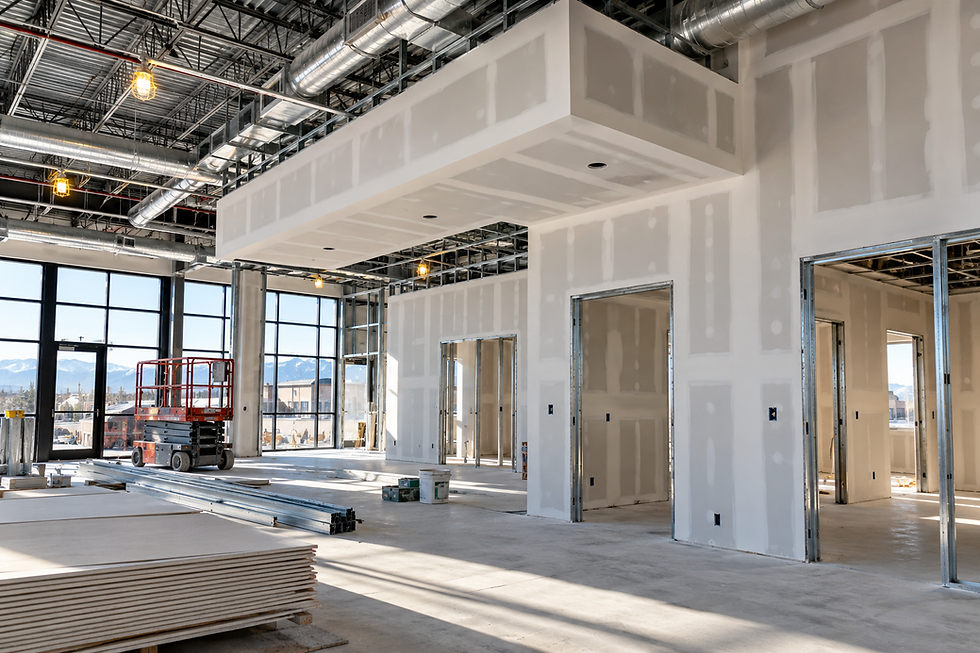
A drywall contractor should understand the complete scope before work begins and coordinate the installation with the project's drawings, specifications, and schedule.
Metal Framing Comes First
Many commercial drywall projects use light-gauge metal framing instead of traditional wood framing.
Metal framing can be used for:
Interior partitions
Full-height walls
Tenant separation walls
Bulkheads and soffits
Ceiling framing
Door and window openings
Architectural features
Equipment and fixture backing locations
Accurate layout and properly installed framing create the foundation for the drywall work that follows.
Understanding Drywall Finish Levels
The required drywall finish depends on the location and final appearance of the wall.
Level 3 finishes are commonly used in areas receiving heavy texture or where appearance requirements are limited.
Level 4 is one of the most common finishes for commercial interiors and provides a smooth surface suitable for many standard paint finishes.
Level 5 includes an additional skim coat over the drywall surface and may be specified in areas with critical lighting, high-end finishes, or where a more uniform finished surface is required.
Following the project specifications is important because not every wall requires the same finish.
Coordination With Other Trades Matters
Drywall contractors often work alongside electrical, plumbing, HVAC, fire protection, low-voltage, and other trades.
Before walls are closed, required inspections and in-wall work generally need to be completed.
Good coordination helps reduce situations where finished drywall must later be opened, patched, or repaired because another trade still needs access.
Commercial Drywall and Project Scheduling
Drywall can involve several separate phases:
Layout
Metal framing
Inspection and trade coordination
Drywall installation
Taping
Multiple finishing coats
Sanding
Touch-ups
Final preparation for paint
Each phase needs to be properly scheduled. Trying to rush finishing before materials have adequately dried or before other work is complete can affect the finished product.
An experienced commercial drywall contractor should understand how to maintain production while coordinating with the overall construction schedule.
Quality Matters in the Finished Product
Once a commercial project is completed, drywall is one of the most visible parts of the interior.
Poor finishing can become noticeable around lighting, corners, ceilings, doors, windows, and long walls.
Attention to framing, board installation, joints, fasteners, corner bead, sanding, and final touch-ups helps produce clean walls that are ready for the specified finish.
Choosing a Commercial Drywall Contractor
When selecting a drywall contractor, price is important, but it shouldn't be the only consideration.
General contractors and project owners should also consider experience, communication, scheduling, manpower, plan-reading ability, quality control, and the contractor's ability to accurately understand the scope.
A well-prepared drywall contractor can help identify potential issues before they become expensive field problems.
Need a Commercial Drywall Contractor in Utah?
Millcon Elite Construction provides commercial drywall and metal framing services for projects throughout Utah.
Our team works with general contractors, developers, property managers, and commercial clients on new construction, tenant improvements, build-outs, and renovations.
Our commercial drywall services include metal framing, drywall installation, taping and finishing, Level 4 and Level 5 finishes, soffits, ceilings, and related commercial drywall work.
Have a commercial project coming up? Contact Millcon Elite Construction today to send us your plans, discuss your project, and request a drywall estimate.


Comments